Last week I attended the first event run by WSET for their Diploma Alumni.
The Wine and Spirit Education Trust is the leading organisation in wine education, world wide. Its qualifications take students from novice to tertiary education level in wine, spirits and even sake, and there are many partner organisations who provide courses supporting students at all levels across the UK and beyond.
As many of Tim’s clients know, I studied for the Diploma in Wine, which is the fourth and highest level of qualification, at WSET’s London School in Bermondsey. I started in 2019 and successfully completed all my exams and assignments by the end of 2021 (Covid having got in the way of completing the course in two years). We are going to the Guildhall in April for my ‘graduation’, and I am looking forward to catching up with many of the people I met while studying.
Throughout our studies we regularly returned the topic of Viticulture and Vinifcation, the first exam that we took, using our knowledge of wine growing and making to help us to understand fully a particular style of wine or wine region. So it was really interesting to attend a tasting and talk devoted to what might seem to be a very specialised element of wine making: wine preservation.
Our speaker was Richard Yeomans, of Coravin, and with Lauren Denyer, one of the London School’s tutors, he gave us an excellent overview of the challenges of preserving wine quality while it is being made and stored. The focus of the evening was on what happens once the bottle has been opened!
The enemy is of course air, which reacts with the wine to diminish its freshness, and through a process of oxidation changes the aromas, flavours and even colour of the wine over a period of days. And once the oxygen has made contact with the wine, that process is hard to stop, though it can be slowed, for example by refrigeration or other means – read on.
The big learning for me was that removing the cork/screw cap from an upright bottle is not the big issue. It’s the act of pouring – tilting the bottle, creating a big surface area of wine as it swills around the bottle, and then bringing a big slug of air back into the bottle when returned upright: that’s when oxidation commences. The relevance of this will become clearer shortly.
Most of the time Tim and I find opening and finishing a bottle over a day or so is not a particularly challenging task, but sometimes we won’t finish a bottle that we’d like to come back to. We don’t have many very expensive or rare wine whose evolution we want to track over time, but we certainly know people who do this, and for this you need a serious wine preservation system.
I was of course attending a presentation by the Senior Vice President of Coravin, so was only one winner on the night, but here’s a quick summary of pros and cons (and costs) of different approaches to ‘putting the cork back in the bottle’.
Putting the cork back in the bottle.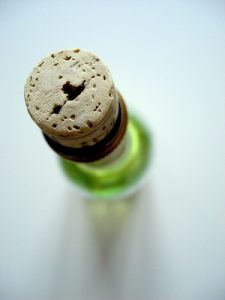
Literally that – open, pour the wine, and press the cork back in, or rescrew the screwcap. Depending on how much you’ve poured there’s loads of air now in the bottle, and the wine is most definitely encountering oxygen. Generally it’s believed that wines of higher acidity, higher alcohol, and higher phenolic content (ie red wines or possibly orange wines that are made with skin contact) will survive longer in this state, but they will start evolving (potentially positively at first) and will then start to deteriorate. I would say a couple of days in the fridge for a white (or a light red) is probably all you’d want to risk, though a heavier red could survive pretty well for 3-4 days. However, that might reflect my personal liking of wines with a bit of oxidative character (eg honeyed/caramel notes).
Sucking the air out of the bottle (Vacuvin or similar device).
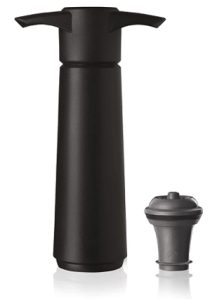 The theory is logical, but I’m not convinced by the actualité, and some Googling suggests that there is little evidence that they work much better than putting the cork back in. Nature abhors a vacuum, and imagine the vacuum needed to remove a couple of glasses worth of air from a bottle. Some enthusiastic pumping and a satisfying squeak when you remove the bung might add a day or so of perceived freshness. A relatively cheap option compared to some of the ones below – you could get a pump and a bung for under a tenner on Amazon.
Pushing the air out of the bottle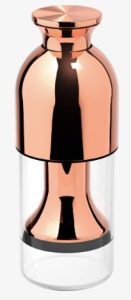
The ‘Eto’ requires you to pour all your remaining wine into a bottle like contraption where you push a valve down (a bit like a cafetière), so there is no air in contact with the surface of the wine. A bit blingy for my liking, and at £130 or more per bottle, feels rather pricey.
‘Scavenging’ the oxygen out of the bottle
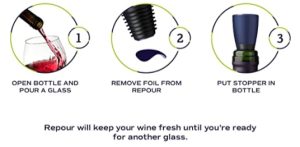 A new one on me, but I will give it a go. The ‘Repour’ Wine Saver is used to close the bottle once wine has been poured, and its oxygen removing material does just that. One stopper (which costs about a fiver) will preserve one bottle’s worth of wine over “days, weeks or months”.
Replacing the air with an inert gas (Argon)
There are a variety of brands of Argon gas (at varying prices), they look like a hair mousse canister, some have dispensing ‘straws’. Again, the theory makes sense, but in my experience it’s impossible to know how much inert gas you’ve put into the bottle, or indeed whether it has forced out all of the air. Probably works best with just a glass or so’s void at the top and beware that every time you pour more wine out of the bottle you will have to replace with gas equivalent to all the glasses’ worth that have been removed. A canister of gas provides a hundred ‘pours’ (ie glasses) can be bought for £15 or less (15p/glass).
Putting the wine into a smaller bottle
I did this a lot when I was studying for the Diploma and trying to improve my tasting technique, and I still do it especially when Tim is away. Better done as soon as the original bottle is opened and I fill the smaller bottle as full as possible. Adding a spurt of inert gas makes me feel even better. I have a collection of bottle sizes to accommodate differing amounts left over. The only reason I can think of to buy a single serve bottle of Blossom Hill from the supermarket.
Not putting the wine in contact with air in the first place
And so to Coravin (or equivalents including the Winekeeper system that lacks Coravin’s style and would not look out of place on a campsite).
Coravin was invented by Greg Lambrecht around 20 years ago. Frustrated during his wife’s pregnancy at not being able to finish his bottles of fine wine, he used his professional experience of developing paediatric needles to deliver chemotherapy to develop what is pretty much the most famous of the preservation systems that can be used without removing the original cork.
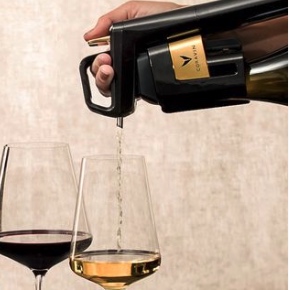 Various versions exist, the ‘original’ approach (now branded ‘Timeless’) inserts a hollow needle through the cork, through which you dispense the inert gas (Argon again) before pouring the wine out. Because the bottle has not been opened, no air has been introduced and therefore no oxygen can make contact with the wine or become dissolved in it. They sell replacements closures for screw caps that provide a similar medium to cork and can be used with the same needle.
Coravin has data for vintage wines drunk over several years (not yet decades) showing expert tasters cannot discern any difference between wines that are taken from bottles that have had wine removed from them and untouched bottles.
Tim and I have a Coravin, and in my experience it is very effective – certainly keeping wine over a year or two (I used it for the pricier wines I was practising my tasting technique on). However, it is not cheap – a basic system will cost well over £200, and a canister of argon gas costing £8 is sufficient to replace 15 glasses of wine (effectively 3 bottles worth at 50p+/glass). They have introduced various other models, including the cheaper ‘Pivot’ which costs less but involves replacing the cork with a stopper to which the pourer/argon dispenser is attached, and the very pricey Sparkling system that injects carbon dioxide under pressure into the bottle (though the stopper is removed to pour each glass of fizz, so ever more gas must be added back after each pour).
I feel that Coravin is a great device for hospitality venues that want to serve a variety of wines by the glass and avoid lots of wastage, but for drinking at home it would be harder to justify the cost, unless you have some precious (and expensive) bottles of wine you want to enjoy over a period of time.
In Conclusion
Much as I enjoyed my studying I am glad I no longer have to maintain my collection of partly drunk wines in a bizarre collection of bottles. It was fun occasionally to find a wine in the rack that had been Coravin-ed, and to have another glass (more likely finish the bottle). I do still use my little bottles when we haven’t finished a wine we like and can’t come back to it for a few days, and since we have it the Coravin will be used occasionally for personal use. However, I reckon the best solution to having too much wine to drink yourself is finding more people to drink it with!